

SMART’s Vision for 2026: Shaping the Future of Research

As we head into 2026, the Singapore-MIT Alliance for Research and Technology (SMART) celebrates remarkable progress in driving innovations to address global challenges. Over the past year, SMART has delivered breakthroughs in translational research that are shaping the future of science, healthcare, technology and more.
2026 promises even more. Driven by a commitment to push the boundaries of research, SMART’s researchers are ready to tackle new challenges. Let’s dive into the collective vision and goals that will define SMART’s journey.

Looking ahead, from one-quarter of the way through our current century, we will continue to extend our understanding of the natural and engineered worlds and leverage this understanding to make fundamental advances and develop needed applications to improve global society, the sustainability of our planet, and the lives of individuals. The landscape of research frontiers will continue to be shaped by developments in both fundamental AI and the integration of AI into leading research in other fields. In addition to continued strong growth in health and life sciences, there are expectations for transformative work in quantum, nuclear energy and decarbonisation. There is great hope that we will soon be able to use AI to gain a meaningful understanding of our world and to develop truly useful explanations from AI models. An important question that society needs to answer is – what proportion of the benefits gained through these advances will accrue to society, consumers and workers rather than to other economic actors? - Bruce Tidor, Chief Executive Officer and Director (Interim), SMART

“Combating the global antimicrobial resistance problem requires a deeper understanding of how resistant infections take hold and where they can be disrupted. My research addresses this challenge by applying combinatorial CRISPR interference (CRISPRi) screens to selectively silence gene pairs in the clinically important pathogen, Enterococcus faecalis.
In 2025, we successfully applied this CRISPRi screening approach to two-component system (TCS) genes – bacterial signalling networks that sense environmental cues and coordinate adaptive responses. Using pairwise gene silencing, we screened TCS genes both in laboratory assays and in mouse wound infection models. This revealed fitness factors specific to each environment, demonstrating the power of our CRISPRi platform to uncover context-dependent determinants of infection. Building on this success, in 2026, we plan to expand these screens to the entire genome and in the context of antimicrobial exposure and environmental stress, with the goal of identifying new vulnerabilities that can be targeted to combat antimicrobial resistance.” - Zeus Nair, Senior Postdoctoral Associate, SMART Antimicrobial Resistance (AMR)

“The suggestion that biologic therapies could be used to treat infections, including those caused by pathogens that have developed resistance to traditional antimicrobials, initially sounds far-fetched. Wouldn’t that be too expensive? In many other industries, practical considerations surrounding cost, manufacturing and scale-up, and requirements for distribution and storage are considered at the outset in deciding which ideas to pursue. In the area of biologic therapies, such concerns are often left to be addressed later – after a lot of time and resources have been put into establishing the safety and efficacy of the biologic. As a result, the products often end up being beyond the reach of much of the world’s population. It has been encouraging to see more focus on this limitation in recent years, with more participation from engineers in designing the therapies, not just the manufacturing processes, with practical considerations at the forefront of the design process from the outset. I am hoping to see more of this trend in the industry in 2026, particularly in markets that aren’t currently well-served by the status quo.” - Hadley Sikes, Principal Investigator, SMART AMR and Willard Henry Dow Professor of Chemical Engineering at MIT

“In recent years, the epitranscriptome – which refers to the chemical modifications that regulate ribonucleic acid (RNA) function – has emerged as an important layer of gene regulation linked to human diseases. In 2025, our team reached an important milestone by establishing a high-throughput, cell-based Liquid Chromatography-Mass Spectrometry (LC-MS) platform for RNA-modification profiling. This enabled us to screen thousands of compounds and identify several promising inhibitors of RNA-modifying enzymes, including a selective METTL1 inhibitor with differential effects in cancer cells. This work has laid the foundation for translating RNA-modification biology into therapeutic discovery.
Looking ahead, our newly awarded Singapore Therapeutics Development Review (STDR) grant will support the next phase of development. In 2026, we aim to expand the compound library, validate top hits across different cancer models and deepen mechanistic studies to understand specificity and mechanism of action. We hope to advance our most promising drug candidates toward preclinical development and accelerate the pathway to RNA modification-targeted precision therapeutics.”- Jingjing Sun, Research Scientist, SMART AMR

“As academia, biotech and pharmaceutical companies around the world make stunning progress in developing new therapies for cancer, we still have work to do to ensure these treatments reach and benefit as many people as possible. In 2026, I look forward to continued progress in bringing cutting-edge therapies — such as CAR-T cells — into local hospitals and lower-income countries. Achieving this will require a combination of infrastructure changes and technological advances, with many of the technologies developed in SMART CAMP among those catalysing progress.”- Michael Birnbaum, Co-Lead Principal Investigator, SMART Critical Analytics in Manufacturing Personalized-Medicine (CAMP)

“As we look toward 2026, our team remains committed to addressing one of the most important challenges in regenerative medicine: ensuring that advanced cell therapies can be produced safely, consistently and at scale. Our ongoing work at SMART CAMP on human induced pluripotent stem cells (hiPSCs) — publicly described under the ReCePro programme — forms the foundation of this mission.
These cells hold enormous promise for treating chronic disease, organ failure and age-related degeneration, but real-world impact depends on overcoming bottlenecks in quality control and manufacturing. By improving the efficiency and reliability of hiPSC production and by developing better ways to evaluate cell quality, we hope to shorten the time it takes for innovative therapies to reach patients.
We believe that by refining these technologies, we aren’t just advancing science — we’re helping build a future where life-changing treatments are more accessible, more affordable and more dependable for the communities that need them most.” - Daniel Roxby, Senior Postdoctoral Associate, SMART CAMP

“In 2025, we developed a novel, label-free iron measurement method using micro-magnetic resonance relaxometry (µMRR). This rapid and non-destructive platform enables precise monitoring of iron in diverse biological samples, including serum, plasma, cells and bacteria, significantly reducing the cost, time and complexity of testing. Beyond clinical diagnostics, we have demonstrated its potential as a process analytical technology (PAT) to monitor key quality attributes during mesenchymal stem cell manufacturing, supporting the development of more effective cell therapies. As the critical role of iron in biological processes becomes increasingly recognised, we anticipate broad applications in understanding disease mechanisms and accelerating drug development. Looking ahead to 2026, our focus is on expanding this technology for more biomarker screening and translating it into real-world research and therapeutic pipelines, reinforcing SMART CAMP’s mission: advancing better ways to produce living cells as medicines for human use.” - Yanmeng Yang, Postdoctoral Associate, SMART CAMP

“A key goal I hope to achieve in 2026 is to move microneedle-based plant sensing and delivery technologies from laboratory prototypes to reliable, field-ready systems. Through SMART and the DiSTAP, our interdisciplinary research combines materials science, plant biology, sensing technologies and data analytics to enable real-time monitoring of plant health, stress responses and post-harvest changes. Close collaboration with industry partners and research institutions will be essential to accelerate translation and scale-up.
In 2026, I hope to see strong scientific and industrial progress in the development of integrated plant monitoring platforms that combine sensing and delivery, along with post-harvest applications to extend the shelf life of perishables. These advances can support earlier intervention, more efficient resource use, reduced post-harvest losses and the creation of more resilient and sustainable agricultural systems.” - Raju Cheerlavancha, Research Scientist at SMART Disruptive & Sustainable Technologies for Agricultural Precision (DiSTAP)
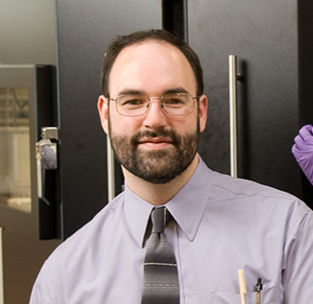
“At Disruptive and Sustainable Technologies for Agricultural Precision (DiSTAP), we have many technical and developmental goals for 2026. One scientific achievement for which I am most excited is demonstrating our ability to intercept and decode inter-plant communication across entire populations, including fields, farms or plantations. We have been steadily developing our ability to sense and decipher the internal signalling of living plants in real time, and to deliver this information into the hands of farmers and plantation operators. Examples include portable Raman spectroscopy and multiplexed nanosensor technology for plant hormones.
These technologies are capable of reporting the types of environmental stresses experienced by plants and crops continuously. In 2026, we will see these technologies converge into hardware and software, combined with exciting new science, that allows humans to monitor plant interactions and social information sharing among plants themselves. This achievement has been a longstanding goal of DiSTAP. This coming year will also see new tools that tap into the earliest information of plant growth in a continuous and instantaneous way, the first demonstrations of their kind. Overall, 2026 looks to be a year of convergence for DiSTAP, as tools, science and technology come together for a new set of enormous breakthroughs.” - Michael S. Strano, Carbon P. Dubbs Professor of Chemical Engineering and the Co-Lead Principal Investigator at SMART DiSTAP

“Changi Airport is one of the most important hubs globally. But what are the economic spillovers for Singapore? Although both the industry and the research community have for decades highlighted the importance of airports to economic growth and attracting companies, it hasn’t been an open question to assert clearly what matters the most: the number of passengers coming to the city, the number of flights by the airport, or the number of different airports to which you are connected. In research which will be soon published in the prestigious journal Nature Cities, combining thousands of flights and the opening of subsidiaries globally for the past ten years, we have demonstrated that what matters most is with which other airports the city is connected to: if you are connected to other well-connected cities via direct flights, the larger the number of global companies you attract to your city. And Singapore has been doing a great job here.
In 2026, my goal is to focus on the use of soft robotics in handling delicate tasks that need to be performed within a limited timeframe in cluttered or hazardous environments.”- Fábio Duarte, Associate Director & Principal Research Scientist, MIT Senseable City Lab, and Principal Investigator, Mens, Manus and Machina (M3S)

“As a soft roboticist with a background in biomedical engineering, my research concentrates on soft robotic arms and grippers intended for eventual application in biomedical and assistive fields. By 2026, I aspire to observe soft robotic systems transitioning from innovative laboratory prototypes to resilient, standardised platforms suitable for clinical and everyday use. In this context, progress in variable-stiffness materials and actuators that seamlessly integrate comfort with precise force regulation for assistance, rehabilitation and preventive care is essential.
Regarding embedded AI, I seek lightweight on-board learning algorithms capable of adapting to individual users’ physiology, movement patterns and situational contexts, while maintaining transparency and trustworthiness for healthcare professionals. Additionally, I anticipate that industry efforts will foster interoperable hardware solutions and open datasets to expedite the translation of these technologies into certified medical devices.” - Luis C. Hernandez Barraza, Postdoctoral Associate at SMART M3S

“In 2026, my goal is to establish domain-specific AI agents that redesign industrial operations and human training. I aim to evolve Large Language Models (LLMs) from generic automation tools into customised, interactive and data-driven decision support agents. Crucially, I plan to leverage the reasoning capabilities of these agents to bridge the gap between AI utility and human learning. By transforming ‘black-box’ outputs into interpretable insights, our tools will serve as dynamic mentors in specific domains, thereby significantly enhancing human capital development in Singapore and beyond.
Building on our comprehensive foundations in generative AI, my team is co-developing these architectures with key local industrial and educational partners. These collaborations ensure the resulting tools are not only technically sound but also precisely tailored to the specific needs of the industry and talent pool.”- Junyi Li, Postdoctoral Associate at SMART M3S

“In 2026, our team is focused on a critical missing piece in the AI conversation: a detailed map of how AI tools connect to actual human work. To solve this, we are building a computational 'Ontology' — a structured library of thousands of human work activities. We are pairing this with an AI-driven 'Classification Pipeline' that automatically sorts the flood of new AI apps on the market and maps them to the specific human tasks they can perform. By creating this unified structure, we aim to move beyond vague predictions and provide organisations with a precise, data-driven blueprint for how AI can augment human decision-making in complex systems.”- Iman Yeckehzaare, Postdoctoral Associate at MIT, Center for Collective Intelligence (CCI) and SMART M3S

“In 2026, we envision demonstrating a wafer-scale 3D sensing engine that tightly integrates chiplets of metasurfaces, light sources and CMOS electronics, proving that machines can see the world with human-like depth and context in a compact, manufacturable platform. Through WISDOM, we will work very closely with stakeholders across Singapore’s ecosystem to co-design devices, packaging and system architectures with technology translation in mind from day one. Our team is working extremely hard in a highly collaborative environment to turn cutting-edge concepts into robust prototypes that can plug into real applications such as autonomous systems and augmented reality. By the end of 2026, I hope our work will clearly position Singapore as a global leader in impactful, industry-ready integrated sensing technologies.” - Chuan Seng Tan, Co-Lead Principal Investigator, SMART Wafer-scale Integrated Sensing Devices based on Optoelectronic Metasurfaces (WISDOM)

“In our research, we use a high-resolution 3D printing technology, called Two-Photon Polymerisation (2PP), to create complex acoustic metamaterials. These intricate structures are engineered to enable advanced, broadband ultrasound imaging capabilities essential for compact wearable devices. While 2PP delivers the sub-micron precision needed, its current comparably slow throughput is the primary bottleneck for translational applications. In the next few years, I hope to see further progress in increasing fabrication rates and unlock the full potential of this technology in translational research.
Our core goal for 2026 is to successfully develop a functional, miniaturised broadband ultrasound transducer that integrates 2PP-fabricated acoustic metamaterials. We aim to substantially push the boundaries in acoustic design by leveraging micro-scale metamaterials to achieve a significant boost in bandwidth and resolution, surpassing the capabilities of conventional probes. WITEC provides the unique platform and expertise in material science, computational modelling and advanced micro-fabrication necessary to achieve this goal. This will allow us to demonstrate novel use cases for ultrasound technology, enhance diagnostic accuracy and contribute significantly to healthcare challenges, such as advanced monitoring in elderly care.” - Franziska Chalupa-Gantner, Postdoctoral Researcher, SMART WITEC

“2025 marks the launch of WITEC. Since the kick-off event in September, key equipment has arrived and talented individuals have joined the lab. The lab is taking good shape. The team has successfully printed bioinspired acoustic metamaterials, which have the potential to enhance the transmission efficiency of ultrasonic transducers and reduce noise, thereby improving ultrasonic image quality.
In 2026, we aim to further refine the 3D printing process to enable the production of metamaterials over larger areas. We will also characterise the ultrasonic transmission and reflection properties of these metamaterials and demonstrate their effectiveness in improving transducer performance. I aspire for WITEC to be the first team to showcase the use of bioinspired metamaterials in enhancing ultrasonic imaging quality.”- Shen Zhiyuan, Scientific Director, SMART WITEC

“In 2026, WITEC will focus on enhancing the bioadhesive ultrasound (BAUS) platform for continuous, real-time monitoring of chronic cardiovascular conditions, particularly hypertension and heart failure. Clinical trials will be conducted at our partner hospital to verify the safety and effectiveness of long-term continuous cardiovascular imaging in managing chronic heart disease. We aim to integrate an AI module to improve preliminary diagnoses and facilitate early interventions, ultimately enhancing patient outcomes.
Our research seeks to increase healthcare accessibility by reducing unnecessary hospital visits through home-based pre-diagnosis. By enabling continuous monitoring, we anticipate lowering healthcare costs while improving the quality of life for seniors. Moreover, our advancements in wearable medical imaging may stimulate economic growth, positioning Singapore as a leader in healthcare technology innovation while addressing critical societal health challenges.” - Xuanhe Zhao, Professor of Mechanical Engineering, Massachusetts Institute of Technology, and Co-Lead Principal Investigator, SMART Wearable Imaging for Transforming Elderly Care (WITEC)


Comments