

SMART Showcases Innovations in Healthcare, Ageing and Urban Sustainability at CREATE Symposium 2026


Dr Kerwin Kwek, Research Scientist at SMART CAMP, sharing SMART's research innovations with attendees at the 2026 CREATE Symposium. (Photo: NRF)
On 25 June 2026, SMART participated in the 2026 Campus for Research Excellence and Technological Enterprise (CREATE) Symposium, which brought together researchers, policymakers and industry stakeholders to explore how Singapore's urban environment shapes public health and well-being. The symposium highlighted data-driven approaches to understanding the links between environmental exposures and non-communicable diseases, while exploring strategies in surveillance, urban design and policymaking to build a healthier and more resilient Singapore.
Opening the programme, Guest of Honour Mr Heng Swee Keat, Chairman of the National Research Foundation, welcomed leading academics and industry experts, including professors and researchers, to the symposium. The event featured a series of talks by local and international experts on topics ranging from environmental health and healthy longevity to urban wellbeing and sustainable cities.
Prof Carlo Ratti, Principal Investigator at Mens, Manus, and Machina (M3S) and Professor of Urban Technologies and Planning at the Massachusetts Institute of Technology (MIT), delivered a talk titled “Senseable Cities, Sensible Health”. The talk introduced the concept of the “Deep Urban Exposome”, an emerging framework that leverages advances in digital sensing, mobility data and artificial intelligence to better understand how urban environments shape human health. Particularly relevant to ageing societies, the framework offers a foundation for designing healthier, more inclusive and adaptive urban environments.

Prof Carlo Ratti, Principal Investigator at SMART M3S and Professor of Urban Technologies and Planning at MIT, delivering a talk titled “Senseable Cities, Sensible Health” at the 2026 CREATE Symposium. (Photo: NRF)
At the research exhibition, SMART’s Antimicrobial Resistance (AMR), Critical Analytics for Manufacturing Personalized-Medicine (CAMP), M3S and Wearable Imaging for Transforming Elderly Care (WITEC) Interdisciplinary research groups (IRGs) showcased innovations spanning precision medicine, diagnostics, healthy ageing and urban sustainability.

SMART CAMP has developed a point-of-care microfluidic system that can assess immune response and classify sepsis risk, enabling faster triage and treatment. The system is currently deployed and evaluated at several public hospitals in Singapore. (Photo: SMART CAMP)
Among them was BioXcyte, a point-of-care microfluidic system developed by SMART CAMP to assess immune response and classify sepsis risk from a finger-prick blood sample. Developed to support faster triage and treatment decisions, BioXcyte uses a disposable microfluidic cartridge, a compact analyser and AI-powered software model to generate a sepsis risk score. The technology is currently being deployed and evaluated at several public hospitals in Singapore.

SMART CAMP researcher performs cell culture experiments to investigate how hiPSCs can be grown more consistently in controlled environments (Photo: SMART CAMP)
SMART CAMP also highlighted its work on improving the scalable manufacturing of human induced pluripotent stem cells (hiPSCs), which hold significant potential for cell therapy and regenerative medicine. The project explores methods to improve the consistency, quality and yield of hiPSC production, contributing to more reliable manufacturing processes for future therapeutic applications.
Beyond these, the IRG also presented research aimed at improving sequencing-based sterility assessment in cell therapy manufacturing. Combining methylation-based filtering and a custom distilled DNA language model, the approach has the potential to enable more reliable and faster sterility assessment in cell therapy manufacturing.
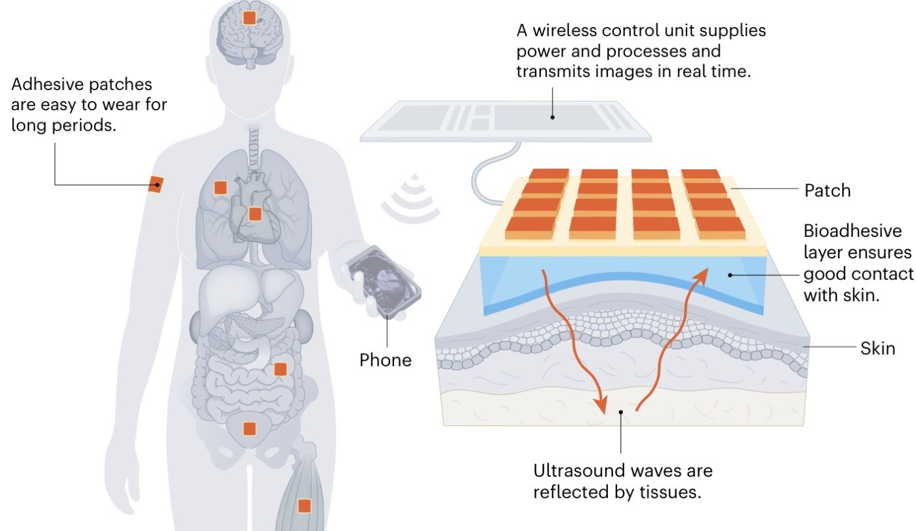
Schematic illustration of the vision for Bioadhesive Ultrasonic Transducers and their potential applications in continuous human health monitoring (Photo: SMART WITEC)
Researchers from SMART WITEC showcased their research in developing the world's first wearable ultrasound imaging platform for continuous monitoring and personalised diagnosis of chronic conditions such as heart failure. By integrating ultrasound transducers, soft bioadhesive materials and AI-driven analytics, the platform aims to enable long-term, non-invasive monitoring beyond traditional clinical settings, supporting earlier intervention and reducing healthcare burdens in ageing populations.
SMART M3S presented SENSE (Satellite-based ENergy Synthesis for Sustainable Environment), a unified generative AI framework that combines satellite imagery and urban energy consumption and height maps to improve the modelling and prediction of urban energy consumption. The technology supports more informed and energy-efficient urban planning, contributing to the development of sustainable and resilient cities.
M3S researchers also featured a study examining the dual burden of overwork and long commutes in major cities. Using anonymised mobility data from more than 100 million individuals across 11 cities, the research and its findings provide evidence to guide more equitable labour and urban development strategies to improve wellbeing and quality of life across income groups.
Together, the research exhibits and presentations highlighted SMART's interdisciplinary approach to addressing some of society's most pressing challenges, from advancing healthcare diagnostics and healthy ageing to shaping more sustainable and resilient urban environments.


Comments